Late-night television entered a new phase of controversy this week after Stephen Colbert publicly criticized both CBS and the Federal Communications Commission (FCC), accusing them of effectively censoring an interview with a Texas political candidate. The dispute, which unfolded during a recent episode of “The Late Show,” has ignited wider debate about political speech, media regulation, and the evolving role of broadcast television in a polarized era.
According to multiple reports, Colbert revealed that CBS lawyers prohibited him from airing an interview with Texas State Representative James Talarico, who is currently running for U.S. Senate. The network reportedly cited legal concerns tied to the FCC’s long-standing “equal time” rule — a policy requiring broadcast stations to offer similar airtime opportunities to competing political candidates during election seasons. (Reuters)
Historically, late-night talk shows have operated under a “bona fide news” exemption that allowed hosts to interview political figures without triggering equal time requirements. However, recent statements and regulatory signals from FCC leadership have suggested a stricter interpretation of the rule, raising uncertainty across the industry. (Reuters)
During his monologue, Colbert addressed the absence of the scheduled guest directly, telling viewers that network lawyers instructed him not only to remove the interview from the broadcast but also to avoid discussing the decision publicly. Instead, he used the segment to criticize both the network and regulators, arguing that corporate caution and political pressure were shaping editorial decisions. (TheWrap)
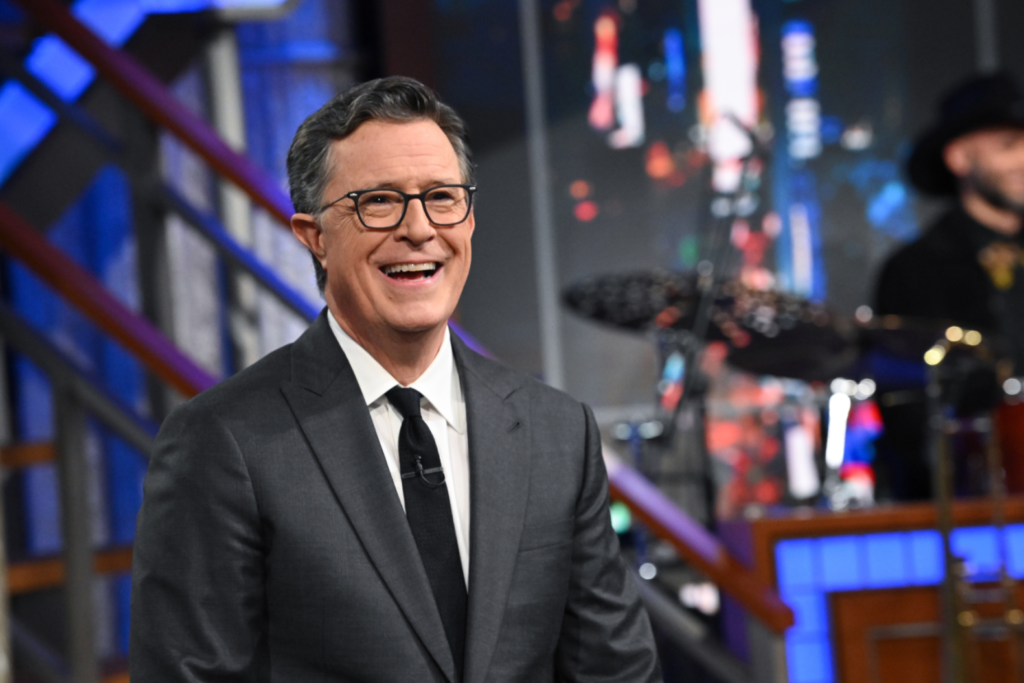
CBS has not publicly framed its decision as political censorship, but critics — including some within the FCC itself — have questioned whether the network’s move represented “corporate capitulation.” FCC Commissioner Anna Gomez described the situation as a troubling example of media companies adjusting content out of fear of regulatory backlash rather than legal necessity. (TheWrap)
The controversy comes at a turbulent time for Colbert and late-night television more broadly. CBS previously announced that “The Late Show with Stephen Colbert” will conclude in May 2026, a decision the network described as financially motivated amid shifting viewing habits and declining advertising revenue. (AP News)
For many observers, the blocked interview highlights deeper tensions between entertainment programming and political oversight. The FCC’s equal time rule dates back decades, originally designed to ensure fairness on broadcast airwaves, which are licensed by the government. Critics argue that applying the rule to comedic talk shows risks blurring the line between satire and traditional political coverage, potentially discouraging hosts from engaging with current events.
Colbert himself framed the issue as part of a larger struggle over media independence, suggesting that regulatory pressure could push late-night hosts toward digital platforms where broadcast rules do not apply. In fact, the interview with Talarico ultimately appeared online rather than on television, drawing significant viewership and demonstrating how streaming and social media are reshaping the distribution of political content. (Reuters)
Industry analysts say the incident reflects broader shifts in American media, where traditional broadcast networks face both regulatory scrutiny and economic pressure from streaming competitors. As networks navigate mergers, declining ratings, and political polarization, decisions once handled purely as editorial choices are increasingly influenced by legal and corporate strategy.
Supporters of stricter enforcement of FCC rules argue that equal time protections remain essential in an era of intense political messaging, ensuring that candidates receive fair exposure. Opponents counter that applying these standards to comedy programs risks chilling free expression and undermining the creative freedom that has defined late-night television for decades.
The clash between Colbert, CBS, and federal regulators has also drawn attention to the uncertain future of late-night formats themselves. As audiences migrate online and platforms evolve, hosts are exploring alternative ways to reach viewers — from podcasts and streaming specials to viral social media segments — potentially bypassing traditional broadcast constraints altogether.
Whether the controversy results in formal regulatory changes remains unclear, but it has already sparked intense conversation about the boundaries of political speech in entertainment media. For Colbert, the moment represents both a challenge to his show’s final season and a symbolic stand against what he views as growing pressure on comedic voices. For the industry at large, it may signal a turning point in how late-night television balances satire, journalism, and the rules governing America’s public airwaves.